
 EN
EN ES
ES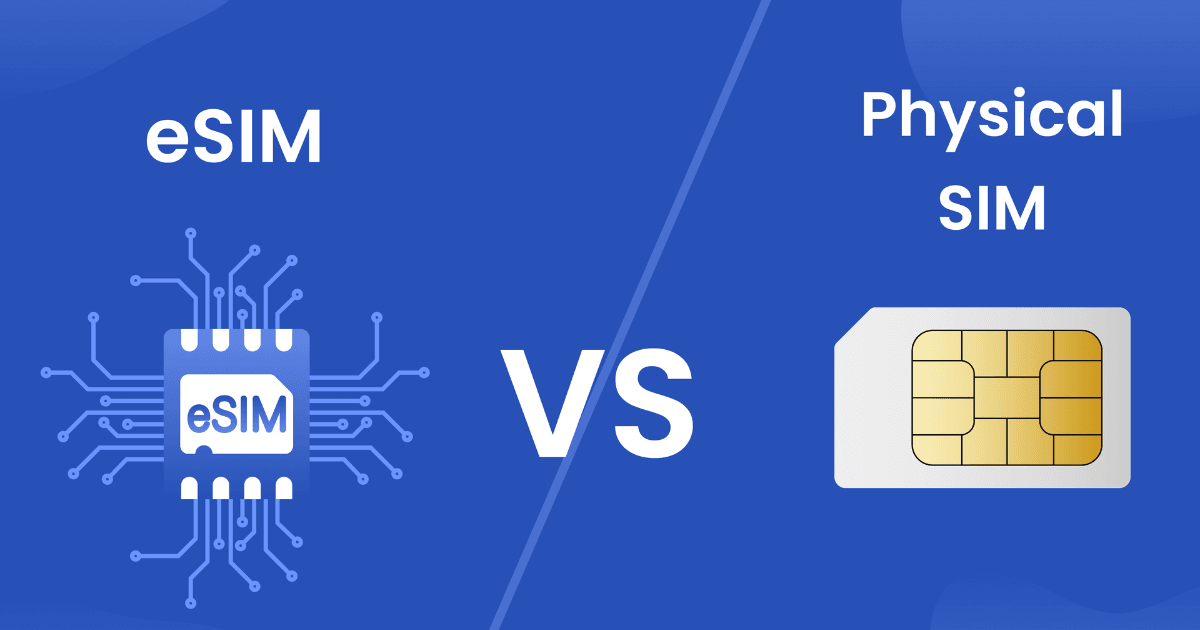
If you're evaluating connectivity options for your smartphone, you've probably already encountered the eSIM vs. SIM debate. By 2026, this is no longer just a technological trend, but a practical decision that affects how you stay connected every day.
Traditional SIM cards have been around for decades and have helped users connect to mobile networks worldwide. But as smartphones become smarter and more connected, eSIM technology is quickly becoming the preferred option for many users.
Major smartphone brands like Apple, Samsung, Google Pixel, and Motorola already support eSIM technology in many of their latest devices. This means users now have more flexibility in choosing how to connect to mobile networks.
But when comparing eSIM vs SIM, which option is really better?
The answer depends on your lifestyle, your device's compatibility, your travel habits, and how much you value convenience. In this guide, we'll break down the differences and help you choose the best option.
What is eSIM and physical SIM: basic concepts
Before delving into eSIM vs SIM, it's important to understand the basics.
A physical SIM card is the small, removable chip that you insert into your smartphone. It stores important mobile network information, such as your phone number, carrier details, and user identity. This allows your phone to connect to cellular networks for calls, texts, and mobile data.
SIM cards have evolved over time. From the large standard SIMs to today's small Nano SIMs, they have become more compact while maintaining the same functionality.
Now let's see what eSIM is.
An eSIM, or embedded SIM, is a digital SIM card built directly into your smartphone or device. Unlike a traditional SIM card, there's nothing to physically insert or remove.
Instead, activation is done digitally. Simply scan a QR code or download a plan from your provider, and your mobile service will be activated in minutes.
The main difference between eSIM vs physical SIM is simple:
Physical SIM = removable card
eSIM = embedded digital chip
Both serve the same function: connecting your device to a mobile network. However, the way they are managed is completely different.
Want to better understand digital connectivity? Read our guide on how eSIM works and discover why it's changing the way people stay connected around the world.
eSIM vs SIM: Differences that really matter
At first glance, both options may seem similar because they serve the same purpose. But in daily use, the differences become much more apparent.
1. Activation process
A physical SIM card requires manual insertion into the phone. You usually need to visit a store or receive the SIM card before activating it.
An eSIM works differently. Everything is digital. You buy a plan online and activate it almost instantly.
This makes the eSIM much faster and more convenient.
2. Flexibility
One of the biggest advantages of the eSIM is flexibility.
Many modern smartphones can store multiple eSIM profiles. This allows users to switch between plans without having to change physical SIM cards.
This is especially useful for travelers and business users.
3. Dual SIM Functionality
Many devices now support the use of Dual SIM.
You can use:
One physical SIM + one eSIM
Two eSIMs simultaneously on compatible devices
This setup is perfect for those who want to keep their personal number active while using another data plan.
4. Device compatibility
Physical SIM cards are still compatible with almost all smartphones.
However, eSIM support is growing rapidly. Most premium smartphones will support eSIM by 2026.
That's why the comparison between eSIM vs SIM is more important than ever.
Advantages of eSIM vs SIM: Which is better for you
When comparing benefits, both technologies offer advantages depending on your needs.
Let's start with the eSIM.
Benefits of eSIM
There are several benefits of eSIM that make it attractive to modern users.
1. Instant activation
This is one of the biggest advantages.
You can buy a plan online and activate it in minutes. You don't have to wait for shipping or visit a physical store.
2. Better travel experience
For travelers, the eSIM changes everything.
Use an eSIM for travel this means you can activate your mobile data before your trip and land connected immediately.
- No SIM kiosks at airports.
- Avoid searching for local operators.
- Overcome language barriers.
This saves time and money.
3. More security
Since the eSIM is integrated into your device, it cannot be physically removed.
This reduces the risks in case of loss or theft of the phone.
4. Multiple plans
Many smartphones allow you to store multiple eSIM profiles. This gives you greater flexibility when switching between personal, work, and travel plans.
Advantages of a physical SIM
A physical SIM card still has its benefits.
1. Easy device change
You can remove your SIM and quickly insert it into another phone.
This is useful if you frequently switch devices.
2. Wide compatibility
Physical SIM cards work with almost all phones, including older devices and budget models.
3. Family configuration
Many users still prefer physical SIM cards because they are used to them and they are easy to understand.
Why travelers will prefer eSIM in 2026
For international travel, the eSIM clearly offers a better experience.
Roaming charges can be expensive. Traditional international roaming plans often cost significantly more than local plans or travel eSIMs.
With Blink eSIM, Travelers can activate affordable prepaid data plans before they leave and stay instantly connected in more than 190 countries.
That means:
- No roaming surprises
- Without changing physical SIM cards
- No waiting at airport kiosks
- Instant mobile data
Whether you're traveling for business, leisure, or remote work, Blink eSIM simplifies global connectivity.
That's why many travelers believe the question of whether eSIM is better than SIM has a simple answer: for travel, yes.
Which option should you choose?
The decision between eSIM vs SIM depends entirely on your personal needs.
Choose eSIM if:
- You travel frequently
- You want instant activation
- You prefer digital convenience
- You use a newer smartphone
- You need several mobile plans
You need several mobile plans
- You use an old phone
- You frequently change devices
- You prefer a traditional setup
- You live in an area with limited eSIM support.
For most smartphone users in 2026, the eSIM offers more convenience and flexibility.
However, the physical SIM card remains a good option for those who prefer simplicity.
Final verdict on eSIM vs SIM
The truth about eSIM vs SIM is simple: both technologies work well, but eSIM is increasingly becoming the smarter choice for modern users.
A physical SIM card remains reliable and practical. But the eSIM offers greater convenience, faster activation, better flexibility, and a much smoother experience for travelers.
As more smartphones adopt eSIM support, digital connectivity will continue to become the standard.
If your device supports eSIM, switching can make staying connected easier than ever.
With Blink eSIM, you can activate affordable data plans in minutes, avoid costly roaming fees, and stay seamlessly connected in over 190 destinations worldwide.
Frequently Asked Questions
Which option is better: eSIM or physical SIM?
eSIMs are generally better for users who seek convenience, flexibility, and simpler connectivity while traveling.
Is eSIM better for traveling?
Yes. The eSIM is ideal for international travel because you can activate a plan before arriving and avoid roaming charges.
Can I use eSIM and SIM at the same time?
Yes. Many modern devices support both a physical SIM and an eSIM simultaneously.
Is an eSIM more secure than a physical SIM card?
Yes. It offers greater security because it cannot be physically removed from the device.
Does eSIM improve signal quality?
Signal quality depends on the operator and network coverage, not on whether you use an eSIM or a physical SIM.