
 EN
EN ES
ES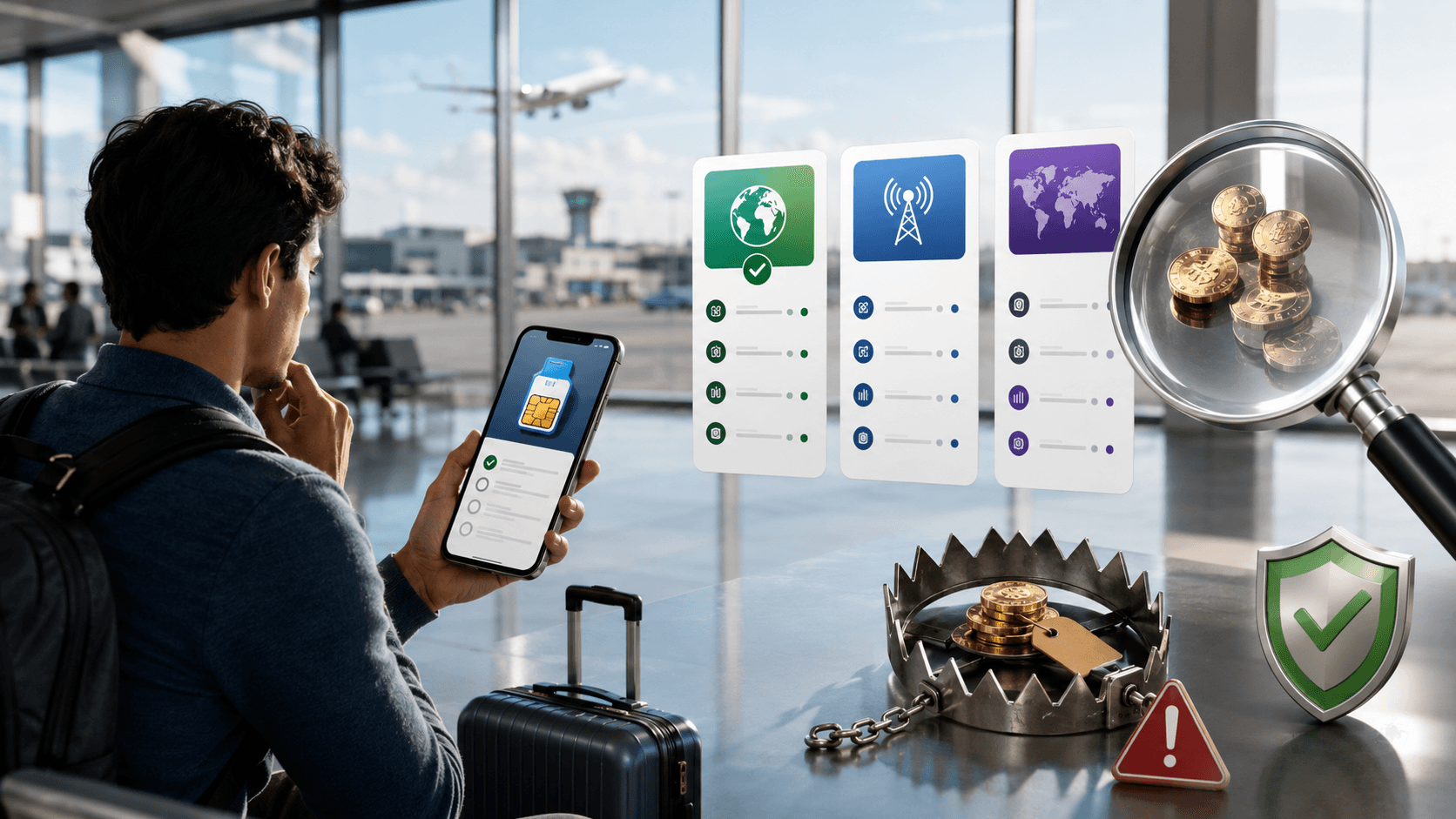
eSIM technology has transformed the way travelers stay connected. It offers instant activation, affordable global connectivity, and eliminates the hassle of buying physical SIM cards abroad.
But while eSIMs are convenient, many travelers overlook one important detail: the hidden costs of eSIMs.
At first glance, an eSIM plan may seem inexpensive. However, hidden fees, unexpected roaming charges, limited coverage, and data restrictions can quickly increase the overall cost.
Understanding the hidden costs of eSIMs before you buy can help you save money and avoid unpleasant surprises during your trip.
In this guide, we'll analyze the most common hidden costs and show you how to avoid them.
Why hidden costs matter when buying an eSIM
Many travelers compare the international eSIM plans based solely on advertised prices.
For example, a supplier might offer:
- 5 GB for $10
- Unlimited data for $20
- Affordable daily plans
These prices may seem attractive, but they don't always show the whole picture.
Some providers include hidden costs such as:
- Activation fees
- Additional roaming fees
- Speed limits
- Data speed reduction
- Top-up charges
These hidden charges can turn a cheap plan into an expensive one.
Therefore, understanding the hidden costs of eSIM is essential before buying.
1. Check for hidden activation fees
Some providers charge additional setup fees.
This is one of the most common hidden fees that travelers often overlook.
Although many providers advertise low prices for their data plans, they may add unexpected eSIM activation fees during checkout.
Always check:
- Final price at checkout
- Taxes
- Service fees
- Activation fees
Price transparency is important.
A reliable supplier should clearly show the total cost before payment.
2. Includes roaming coverage
Not all eSIM plans offer the same coverage.
Some plans work well in one country, but may charge extra if you travel to multiple destinations.
This is especially important if you visit several countries on the same trip.
Unexpected eSIM roaming charges may appear if your plan does not include the regions you plan to visit.
Always check:
- Compatible countries
- Compatible countries
- Compatible countries
Knowing this in advance helps you avoid surprise charges.
3. Beware of “unlimited data” limits
Unlimited data doesn't always mean truly unlimited data.
This is one of the biggest sources of hidden eSIM costs.
Many providers advertise unlimited plans, but reduce speed after reaching a certain usage limit.
This is known as speed reduction or throttling.
For example:
- High speed for the first 2 GB per day
- Reduced speed after the limit
- Additional charge for premium speed
Always read the fine print.
Check:
- Fair use policies
- Daily data limits
- Speed reductions
This helps you understand what you're really paying for.
4. Carefully review the validity of the data
Not all plans last as long as travelers expect.
Some plans expire quickly.
For example:
- 3 days
- 7 days
- 15 days
If your trip lasts longer than the validity of your plan, you may need to top up or purchase another plan.
This adds to the hidden costs of eSIM.
Before you buy, compare your plan with:
Duration of the trip
Data needs
Usage habits
Choosing a better plan from the start can help you save money later.
5. Understand data limits
Choosing the wrong plan can end up costing you more.
Many travelers underestimate their use of the internet.
Activities such as:
- Video streaming
- Video calls
- Social networks
- Maps
- Share hotspot
They consume a lot of data.
Ignoring eSIM data limits can lead to you buying extra top-ups or paying more during your trip.
Calculate your daily usage before selecting a plan.
This helps you avoid unnecessary expenses.
6. Check the hotspot restrictions
Not all eSIM providers allow hotspot sharing.
This is important if you plan to use your phone as a hotspot for:
- Laptop
- Tablet
- Other devices
Some providers charge extra for using a hotspot.
Others block it completely.
This can become a hidden expense if you rely on shared internet while traveling.
Always check the hotspot's policies before purchasing.
7. Compare regional plans and plans by country
Choosing the wrong type of plan can cost you more than necessary.
Many providers offer:
- Plans for a single country
- Regional plans
- Global plans
If you're only visiting one country, a local plan might be cheaper.
If you visit several countries, the plans international eSIM they usually offer better value.
Choosing the right plan helps reduce unnecessary costs.
8. Avoid frequent recharging
Smaller plans may seem cheaper at first.
But frequent top-ups can increase total spending.
For example:
- Initial plan = $8
- Initial plan = $8
- Another top-up = $7
Suddenly, your "cheap" plan costs much more.
This is another major source of hidden eSIM costs.
Often, it's better to buy a slightly larger plan from the start.
9. Choose a reliable supplier
Not all eSIM providers offer transparent pricing.
A low advertised price does not always guarantee good value.
The best eSIM for travel must offer:
- Clear prices
- Reliable coverage
- Transparent policies
- No surprise charges
Reading reviews and checking the provider's policies helps avoid bad experiences.
Choose a provider known for its transparency.
10. Choose suppliers with transparent pricing
The best way to avoid hidden costs is simple: choose suppliers with clear and honest prices.
Transparent suppliers clearly demonstrate:
- Total cost of the plan
- Amount of data
- Coverage
- Validity
- Speed limits
This makes trip planning much easier.
Why Blink eSIM is a smart choice
Blink eSIM is designed for travelers seeking simple, affordable, and transparent connectivity.
With Blink eSIM, you get:
- Clear prices
- No hidden activation fees
- Reliable coverage in more than 190 countries
- Hotspot support
- Simple setup
- No physical SIM
- No complicated settings
- No surprise charges
Blink eSIM offers simple prepaid plans, designed for modern travelers.
Whether you need a prepaid eSIM for vacation travel, business, or remote work, Blink helps you stay connected with no hidden costs.
Final reflections
Buying an eSIM can be one of the easiest and smartest ways to stay connected while traveling, but only if you understand the potential hidden costs before making the purchase. From activation fees and roaming charges to data caps and speed restrictions, the little details can quickly add up if you overlook them.
Taking the time to compare coverage, plan validity, hotspot support, and price transparency can help you avoid unnecessary surprises. By choosing a reliable provider with clear pricing and dependable coverage like Blink eSIM, you can enjoy seamless connectivity, better value, and a stress-free travel experience without worrying about hidden fees.
FAQs
What are the hidden costs of eSIM?
These are unexpected charges, such as activation fees, roaming charges, top-up costs, or speed restrictions that are not clearly shown in the advertised prices.
Can unlimited eSIM plans have limits?
Yes. Many unlimited plans include speed throttling or fair use limits.
Are eSIM roaming charges expensive?
They may be if your plan doesn't cover all the destinations you visit.
How do I avoid hidden eSIM fees?
Always check prices, data limits, validity and coverage before buying.
Does Blink eSIM have transparent pricing?
Yes. Blink eSIM offers clear pricing with no hidden fees.