
 EN
EN ES
ES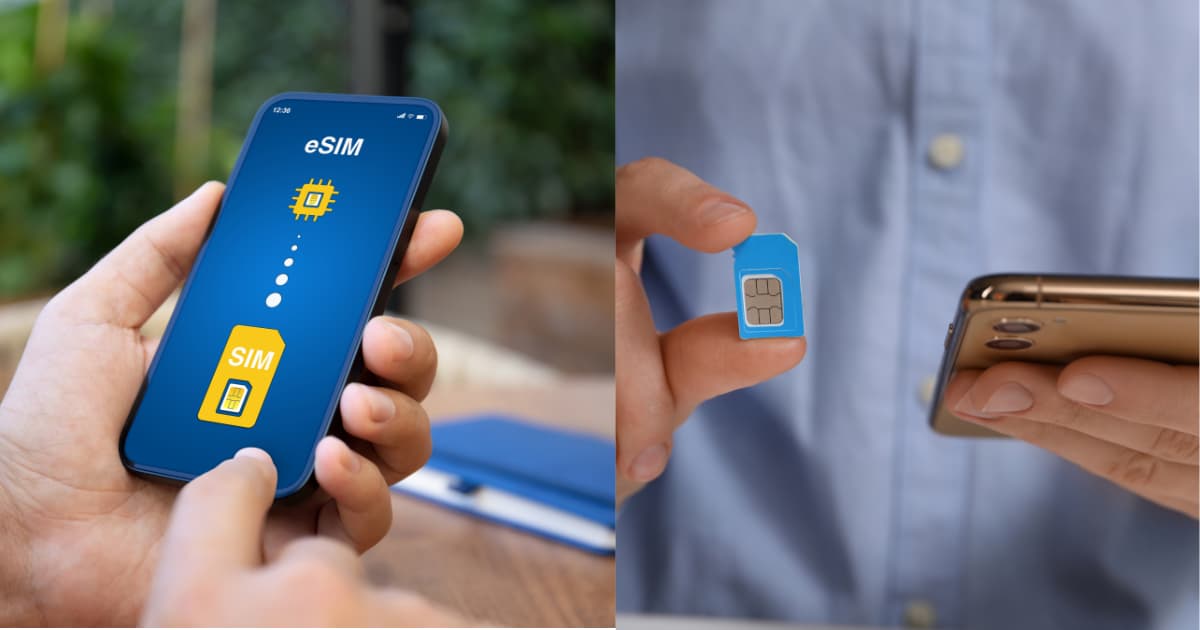
Staying connected during international travel is no longer optional; it's essential. From navigating unfamiliar cities and booking transportation to checking emails and sharing travel updates, mobile connectivity plays a vital role in every experience.
Today, travelers have two popular options: digital eSIMs and traditional physical SIM cards. However, choosing between them can be confusing, especially if you are looking for a solution that is affordable, convenient, and easy to activate. Understanding the differences between an international prepaid eSIM and traditional SIM card can help you choose the best option based on your destination, the length of your trip, and your usage needs.
Both options have advantages and limitations, and the best choice usually depends on your travel style.
What is an international prepaid eSIM?
An eSIM is a digital SIM card integrated directly into your device. Unlike a physical SIM card, you don't need to insert or remove anything from your phone. Instead, you simply download a mobile plan using a QR code or an app and activate it digitally.
This makes eSIM technology especially useful for international travelers. You can buy a data plan before you leave and activate it as soon as you arrive at your destination.
An eSIM for international travel offers a major advantage: convenience. You don't need to visit a local store or exchange SIM cards at the airport. Everything can be done online in just a few minutes.
This is one of the reasons why many travelers prefer international prepaid eSIM vs traditional SIM card for trips abroad.
You can also read our guide on how Prepare your phone for international travel to learn about essential settings, connectivity options, and tips for staying connected abroad.
What is a traditional SIM card?
A traditional SIM card is the physical chip that you insert into your phone to connect it to a mobile network. It stores your subscriber identity and allows your device to access cellular services such as calls, text messages, and mobile data.
When traveling abroad, many people buy a local prepaid SIM card in their destination country. This usually offers affordable local rates and reliable coverage.
A traditional SIM card for travel can be useful, but it also requires additional steps. You typically need to:
- Find a SIM card vendor
- Buy the card
- Insert it into your device
- Complete the activation
This process can be inconvenient, especially on short trips or when visiting multiple countries. That's why the debate between international prepaid eSIMs and traditional SIM cards has become increasingly relevant for modern travelers.
Key differences between eSIM and traditional SIM
When comparing eSIM vs physical SIM for travelers, the main differences lie in comfort, flexibility, and the activation process.
A traditional SIM card requires physical handling, while an eSIM is activated digitally. Physical SIM cards are still compatible with most phones, but eSIMs are rapidly becoming standard in newer smartphones.
Another key difference is the ease of switching networks. With an eSIM, changing carriers or plans can be done in just a few steps from your phone. With a physical SIM, changing networks means removing one card and inserting another.
This makes comparisons between international prepaid eSIMs vs traditional SIM cards especially important for frequent travelers.
Benefits of an international prepaid eSIM
There are several reasons why travelers are increasingly preferring eSIMs. The main benefits of an international prepaid eSIM include:
- Instant digital activation
- You don't need to change physical SIM cards.
- You can save multiple plans on a single device.
- It's better for multi-country trips
- Easy online top-ups
Travelers who move between multiple destinations greatly benefit from the flexibility of an eSIM. Instead of buying several physical SIM cards, you can switch between digital plans depending on the country or region.
This makes international prepaid eSIM vs traditional SIM card a simpler decision for frequent travelers.
Benefits of traditional SIM cards
A traditional SIM card might be a good option if:
A traditional SIM card might be a good option if:
- Your device is not compatible with eSIM
- You're going to stay in one country for a long time.
- You need local calls and SMS
- Looking for the cheapest local fares
In many countries, local SIM cards still offer excellent value for money for long-term travelers.
For those on a tight budget who plan to stay in one destination for weeks or months, physical SIM cards can still be a strong option.
Which option is better for travelers?
The answer depends on your travel style.
If convenience and speed are paramount, eSIMs usually win. If cost is your top priority for an extended stay, physical SIM cards may offer better value.
Here's a comparison of prepaid SIM cards for travel:
Choose eSIM if:
- You travel frequently
- Visits to several countries
- You want instant activation
- You prefer digital convenience
Choose traditional SIM if:
- Your phone does not support eSIM
- You stay in one country for a long time
- You need local voice services
- You prefer plans from local operators
This is where international prepaid eSIM vs traditional SIM card becomes a personal decision based on your travel needs.
Why eSIM is becoming the preferred option
The growth of eSIM technology is changing the way travelers stay connected. More and more devices support eSIM, and more providers are offering affordable global and regional plans.
An eSIM for international travel gives travelers flexibility that physical SIM cards simply cannot match. You can buy plans online, activate them instantly, and switch between countries without changing hardware.
This convenience is especially valuable for business travelers, digital nomads, and frequent flyers.
As travel becomes more digital, the use of eSIMs is expected to continue growing rapidly.
Final verdict: Which one should you choose?
Choosing the best SIM card for international travel depends on your needs. If you value convenience, flexibility, and instant connectivity, an eSIM is usually the best option. It eliminates the need to physically swap SIM cards and works especially well for frequent travelers or trips to multiple countries.
This is where Blink eSIM shines. With fast activation, affordable plans, and Coverage in more than 190 countries, Blink eSIM offers a simple way to stay connected abroad. For most modern travelers, it's a smarter and more convenient option.
Frequently Asked Questions
Which is better for travel: eSIM or traditional SIM?
It depends on your needs. eSIMs offer more convenience and flexibility, while traditional SIM cards may offer lower local rates in some countries.
Are eSIMs cheaper than physical SIMs?
Not always. For short trips or trips to several countries, eSIMs are usually cost-effective. For longer stays, a local SIM card can be cheaper.
Can I use an eSIM and a physical SIM at the same time?
Yes. Many modern smartphones allow the use of dual SIM, combining a physical SIM with an eSIM.
Do all phones support eSIM?
No. eSIM only works on compatible, unlocked devices. Always check compatibility before purchasing a plan.
Is an eSIM good for international travel?
Yes. The eSIM is one of the most convenient options for travelers because it allows instant activation and easy switching between plans.