
 EN
EN ES
ES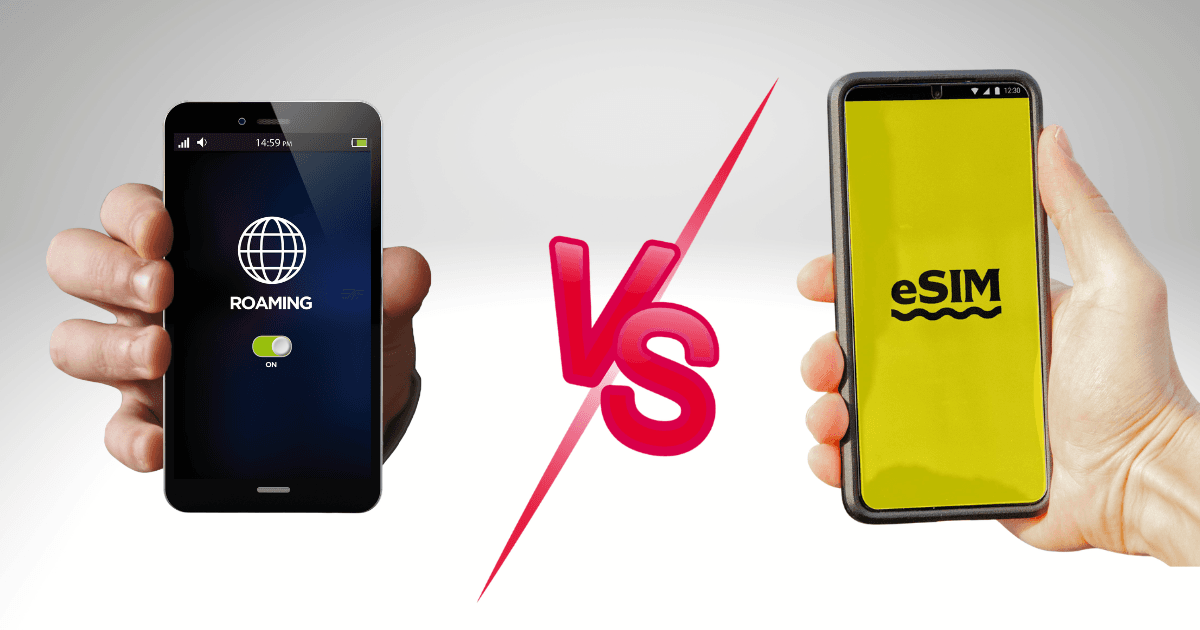
Staying connected while traveling abroad is no longer a luxury, but a necessity. Whether it's finding your way around a new city, booking transportation, sharing travel photos, or communicating with family, having reliable mobile data makes any trip more convenient.
However, many travelers still wonder whether they should use an eSIM or rely on the international roaming service offered by their mobile operator.
Both options provide internet access abroad, but they differ significantly in cost, convenience, flexibility, and performance. Understanding these differences can help you choose the best solution for your next trip and avoid unexpected mobile bills.
In this guide we will compare eSIM vs international roaming, explain their advantages and disadvantages and help you decide which alternative offers the best value for money.
What is an eSIM?
An eSIM, or embedded SIM, is a digital SIM card that allows you to activate a mobile data plan without inserting a physical SIM card. Instead of buying a local SIM after arriving at your destination, you can download and activate a data plan directly on a compatible mobile phone.
When you want to know how eSIM works, The process is simple: you scan a QR code or install the activation profile provided by your carrier. Then, the device connects to a local mobile network. Many travelers now choose an eSIM for international trips because it offers instant connectivity, flexible plans, and affordable prices in numerous countries.
What is international roaming?
The International roaming allows you to use your usual phone number and mobile operator while traveling abroad.
Your home network maintains agreements with local telecom operators, allowing you to make calls, send messages, and use mobile data outside your country.
Although roaming is convenient because you don't need to change your SIM card or install another service, it usually includes higher data rates and limited plan options.
eSIM vs international roaming: main differences
| Feature | eSIM | International roaming |
|---|---|---|
| Configuration | Digital activation in just a few minutes | Automatic activation through your operator |
| Cost | Generally cheaper | It's usually more expensive |
| Physical SIM | It is not necessary | Use your usual SIM card |
| Data plans | Flexible local or regional plans | Limited carrier packages |
| Coverage | Local mobile networks | Associated roaming networks |
| Activation | Before or after arriving | Automatic when traveling |
| Ideal for | Tourists and frequent travelers | Short business trips or emergencies |
Which Option Is More Affordable?
When comparing eSIM vs international roaming, cost is one of the most important factors in making a decision.
International roaming plans often charge high rates for mobile data, especially when you exceed the included daily limit. Some carriers also apply additional charges for calls and text messages, which can lead to unexpectedly high bills.
An eSIM, on the other hand, allows you to purchase prepaid data plans based on your destination and the duration of your trip. Because the device connects directly to local networks, prices are usually considerably lower than international roaming charges.
For travelers staying abroad for several days or weeks, an eSIM is usually the most economical alternative.
Convenience: Which option is simpler?
Both options are comfortable, but they cater to different travel needs.
International roaming works automatically when you arrive in another country. You just need to activate data roaming in your phone settings and continue using your usual number.
An eSIM requires initial setup before or after arrival, but activation typically takes only a few minutes. Once installed, the phone automatically connects to compatible local networks.
Many travelers prefer to use an eSIM because it eliminates the need to search for SIM card vendors at the airport or replace the physical SIM card.
Network coverage and performance
The quality of the connection depends primarily on the local operator providing the service.
International roaming connects through your usual operator's partner networks, which don't always offer the strongest signal or the fastest data speeds.
eSIM providers typically collaborate directly with leading local operators, enabling access to reliable coverage and high-speed mobile data at your destination.
For those who visit multiple cities, regions, or islands, an eSIM can provide a more stable connection experience.
Flexibility for different types of travelers
One of the main advantages of an eSIM is its flexibility.
Travelers can choose between:
- Specific plans for a country.
- Regional plans.
- Global plans.
- Short or long duration data packets.
International roaming plans are usually set by the mobile operator and offer fewer customization options.
When you travel frequently or visit several countries during the same trip, a travel eSIM makes switching between destinations considerably easier.
Is an eSIM better for holiday trips?
For most leisure travelers, the answer is yes.
Whether you're exploring beaches, hiking, shopping, or visiting tourist attractions, mobile data lets you:
- Orient yourself using online maps.
- Book tours and transportation.
- Use translation apps.
- Stay connected on social media.
- Access digital boarding passes.
- Contact local hotels and services.
Since an eSIM offers reliable internet at competitive prices, it's an ideal solution for holidays.
When might it be best to use international roaming?
Although eSIMs are becoming increasingly popular, international roaming can still offer advantages in certain situations.
Roaming may be appropriate when:
- You only travel for one or two days.
- Your operator includes free international roaming.
- You need to receive calls on your main phone number.
- Your device is not compatible with eSIM technology.
For short business trips where convenience is more important than price, roaming can still be a practical option.
How an eSIM helps keep travelers connected
Having internet access throughout the journey improves both comfort and safety.
An eSIM allows travelers to:
- Consult maps and avoid getting lost.
- Book taxis and public transport.
- Check for flight updates immediately.
- Translate foreign languages.
- Find nearby restaurants and attractions.
- Share travel memories in real time.
- Contacting family members during an emergency.
Unlike international roaming, which can generate high costs, an eSIM offers more predictable expenses through prepaid data plans.
Tips for choosing between an eSIM and international roaming
Before selecting a mobile connectivity option, consider the following factors:
- Compare your carrier's roaming rates with available eSIM plans.
- Check if your phone is compatible with eSIM.
- Calculate the amount of mobile data you will need.
- Consider the length of your trip.
- When visiting several countries, choose a plan of global eSIM.
- Activate your eSIM before leaving to have immediate connectivity upon arrival.
Planning ahead can help you save money and avoid unnecessary worries during your trip. It's also one of the best ways to understand how to avoid roaming charges.
Final verdict: Which option is better and more economical?
When comparing eSIM vs international roaming, the best alternative depends on your travel style.
International roaming offers simplicity because it works with your usual mobile number, but it generally comes with higher costs and less flexibility.
For most travelers, an eSIM is the smartest option. It offers affordable prepaid data plans, quick digital activation, access to reliable local networks, and the ability to stay connected without changing your physical SIM card.
Whether you're traveling for business, a family vacation, or an extended stay, an eSIM helps reduce roaming costs and provides a reliable mobile connection.
When planning your next international trip, choosing an eSIM can offer you a simpler connection, better value for money, and greater peace of mind throughout your journey.
Frequently Asked Questions
1. Is an eSIM cheaper than international roaming?
Yes. An eSIM typically offers lower data costs than international roaming, especially during long holidays and frequent trips abroad.
2. Can I keep my regular phone number while using an eSIM?
Yes. Most compatible phones support the Dual SIM feature, which allows you to keep your physical SIM card active along with an eSIM.
3. Are all mobile phones compatible with eSIM?
No. Only certain phones are compatible with eSIM technology. Check your device specifications before purchasing a plan.
4. Is an eSIM suitable for international travel?
Yes. eSIMs offer affordable mobile data, quick activation, and reliable connectivity in many countries without having to change your physical SIM card.
5. When should I use international roaming?
International roaming can be useful for short trips, emergency travel, or when your operator includes roaming benefits at an affordable price.
6. Can I activate an eSIM before the trip?
Yes. Most providers allow you to install and configure the eSIM before you leave, so you can connect immediately after arriving at your destination.